 +8615753113189












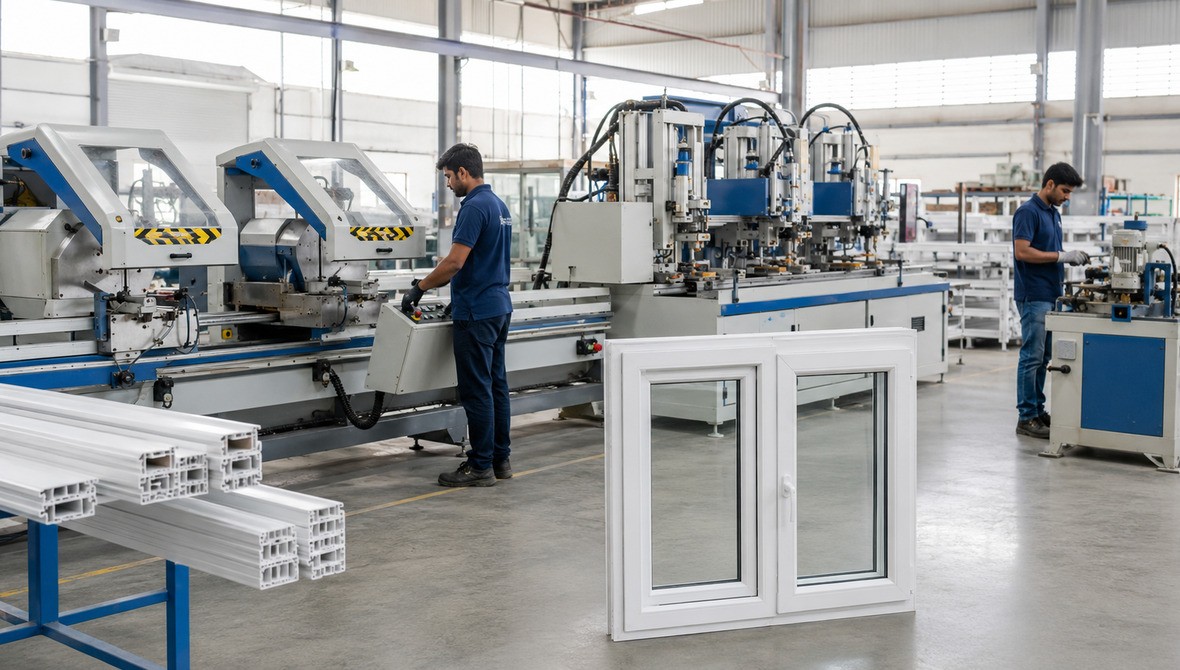
What Really Drives uPVC Window Making Machine Price in India
The uPVC Window Making Machine Price in India depends on production capacity, automation, configuration, component quality, after-sales support and import-related expenses.
Two machines may look similar but deliver very different results in cycle time, accuracy, labour requirement and reliability. The lowest initial quote therefore does not always mean the lowest production cost.
1. Automation Level
Automation is a major factor affecting uPVC Machine Price. A basic or semi-automatic setup needs more manual loading, positioning and measuring, but may suit a new or moderate-output workshop.
An Automatic uPVC Window Making Machine can reduce manual intervention and improve repeatability. Automatic feeding, programmed cutting, multi-head welding and corner cleaning can increase productivity while reducing dependence on operator skill.
Higher automation costs more initially but can provide:
Faster production cycles
Lower labour requirement per window
Reduced measuring and cutting errors
More consistent finished quality
Better utilization of profiles and other materials
Choose the automation level that matches the required output, product range, workforce and budget.
2. Production Capacity and Cycle Time
Capacity directly influences uPVC Window Machine Price. A small workshop does not need the same equipment as a factory supplying large projects.
Capacity depends on profiles processed per shift, cutting and welding cycles, simultaneous operations and changeover time. Faster servo systems, multiple heads and automated handling typically increase both output and price.
Estimate realistic demand before selecting equipment. Too little capacity creates bottlenecks, while an underused high-output line unnecessarily increases capital cost.
3. Number of Heads and Working Stations
Machine configuration plays an important role in total uPVC Machine Cost. A single-head cutting or welding machine normally costs less than a double-head or four-head system. However, multi-head equipment can complete several operations or joints within one working cycle.
A four-head welder can process all frame corners in a coordinated cycle, while a single-head machine requires repeated positioning. Double-head cutters can likewise improve speed and consistency.
A complete plant may include cutting, V-cutting, routing, welding, corner-cleaning and end-milling machines. The quotation therefore depends on whether the buyer needs one standalone machine, a starter package or an integrated line.
4. Cutting, Welding and Machining Technology
The technology used inside a machine affects accuracy, finish and price. Pneumatic systems, servo motors, CNC controls, precision guides, digital displays and optimized welding controls all add to the equipment specification.
Advanced cutting systems improve dimensional accuracy, while controlled welding and CNC corner cleaning can reduce manual finishing and rejection. These capabilities also increase the initial machine price.
When comparing offers, buyers should review measurable specifications rather than relying only on general terms such as “automatic” or “high speed.”
5. Brand and Quality of Components
Electrical, pneumatic and mechanical component quality can change the price of similar-looking machines. Motors, cylinders, controllers, sensors and tools affect performance and maintenance.
Industrial-grade branded components may cost more but can offer better serviceability and operating life. Ask suppliers to identify major components and confirm replacement availability in India. Hard-to-source parts can turn a low quotation into costly downtime.
6. Profile Compatibility and Product Flexibility
Machines may require specific tooling, fixtures, settings or cutting ranges for different profile systems and designs.
A factory producing casement windows, sliding windows, doors or custom frames needs suitable flexibility. Wider processing ranges and quick-change tooling may cost more but allow the business to accept more varied orders.
Buyers should share profile drawings, maximum section dimensions, window styles and expected glass or hardware requirements before requesting a final quotation.
7. Imported Equipment, Freight and Duties
For imported machines, freight, insurance, customs duty, inland transport, port handling and installation affect the landed uPVC Window Making Machine Price in India.
Exchange rates can also change the payable amount. Clarify whether the offer is ex-works, FOB, CIF or site-delivered, and ask for machine value, shipping, taxes, installation and options to be separated.
8. Installation, Training and After-Sales Support
Installation and operator training help equipment reach its intended accuracy and output. Confirm whether commissioning, engineer travel and training are included.
Remote diagnosis, local support, spare parts and warranty coverage contribute to real purchase value. Timely support can prevent expensive production stoppages.
Before ordering, confirm warranty coverage, installation scope, service response time, spare-parts availability and support for software or calibration.
9. Optional Tooling, Software and Factory Utilities
Standard quotations may exclude blades, router bits, fixtures, profile-specific tooling, optimization software, compressors, stabilizers and material-handling equipment.
Electrical supply, compressed air, floor space and loading arrangements should also be included when evaluating total uPVC Machine Cost.
How to Compare uPVC Machine Quotations Correctly
Do not compare quotations by their final totals alone. Create a common checklist and evaluate each supplier against the same production requirement. Review machine configuration, processing range, output, automation, component brands, included accessories, warranty, installation and delivery terms.
Calculate cost per finished window as well as purchase price. Higher productivity can reduce labour, waste, rework and delivery delays.
Information to Share Before Requesting a Quote
Share the window types, profile drawings, required output, preferred automation, factory utilities, budget, delivery location and expansion plan. These details help the supplier recommend the correct package instead of providing a generic price.
Frequently Asked Questions
What is the uPVC window making machine price in India?
There is no single standard price. It varies according to machine type, automation, production capacity, number of heads, component brands, tooling and whether freight, tax, installation and training are included.
Which machines are required to start uPVC window production?
A typical setup may require profile cutting, routing or milling, welding and corner-cleaning machines. The exact combination depends on the window styles, profile system and planned output.
Is an automatic uPVC machine better than a semi-automatic machine?
An automatic machine generally provides faster cycles, repeatable accuracy and lower dependence on manual labour. A semi-automatic machine may be more economical for a new or lower-volume fabrication unit.
Does the quoted machine price include installation and training?
Not always. Ask whether commissioning, operator training, engineer travel, freight, duties, taxes, tooling and accessories are included before comparing quotations.
How should I select the correct machine capacity?
Estimate the required windows per shift, expected order growth, product variety and available workforce. Select capacity that meets current demand while providing reasonable room for expansion.
Final Thoughts
The uPVC Window Making Machine Price in India is determined by the complete production solution—not simply by the machine name. Automation, capacity, number of heads, processing technology, component quality, profile compatibility, landed costs and after-sales support all influence the final investment.
The best purchasing decision balances initial price with output, accuracy, flexibility, operating cost and service support. Define your production goals first, compare quotations on an equal basis and examine the full cost of ownership before selecting a supplier.